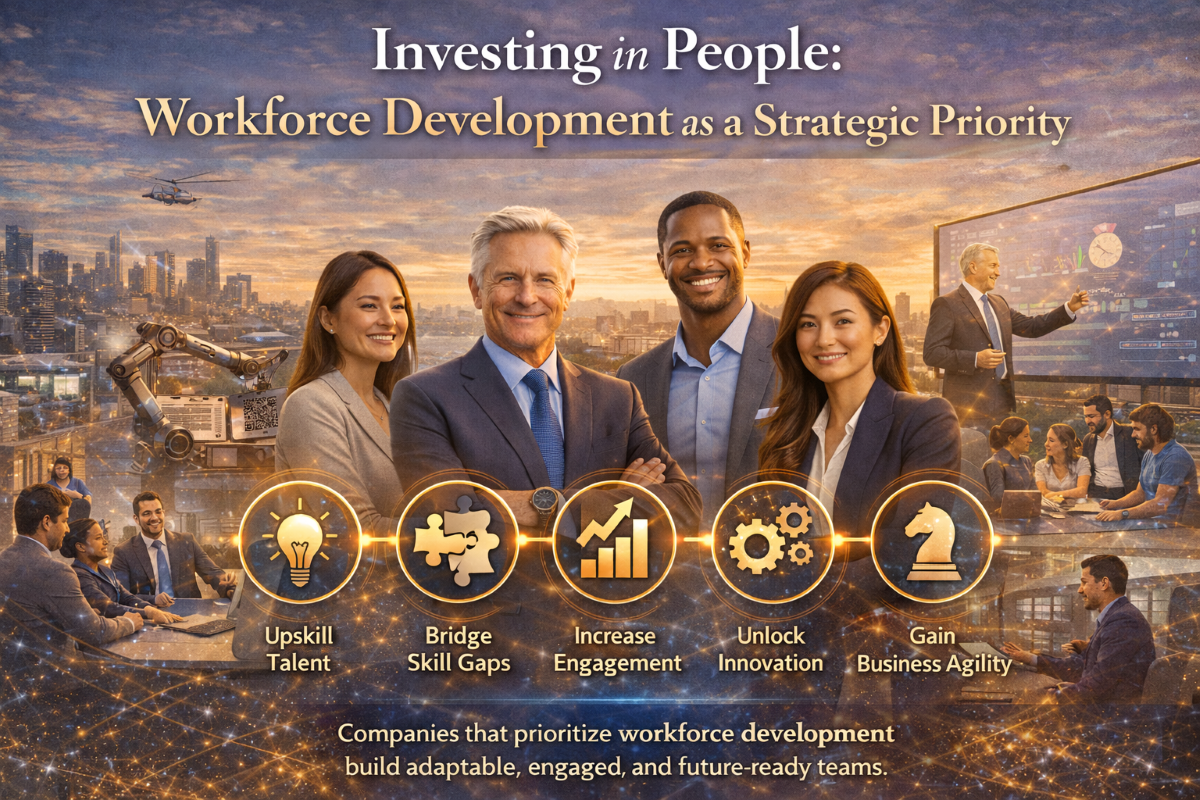
In today’s rapidly changing business environment, the most successful organizations are those that invest in their people. Workforce development has emerged as a critical strategic priority, enabling companies to build the capabilities needed to adapt to shifting market demands, technological innovation, and evolving labor expectations.
Rather than viewing training and development as administrative tasks, forward-thinking leaders are integrating workforce development into the core of organizational strategy. This approach fosters a culture of continuous learning, drives performance outcomes, and strengthens internal leadership pipelines.
Effective leadership is no longer confined to titles or years served. Instead, it is characterized by a leader’s ability to inspire growth, nurture talent, and prepare teams for long-term success. Companies that embed workforce development into their operational ethos are better positioned to innovate, retain talent, and sustain competitive advantage.
This shift reflects an understanding that employees are more than skilled labor — they are strategic assets. When organizations prioritize skills development, mentorship, and cross-functional growth, they unlock human potential that drives both performance and resilience.
Workforce development encompasses a broad range of activities, including training programs, mentorship initiatives, career pathways, and organizational learning frameworks. These elements help companies achieve outcomes such as:
By creating environments where employees can refine existing skills and build new expertise, organizations foster a culture of continuous improvement that supports sustainable growth.
Transformational leadership is marked by a commitment to empowering others. Rather than relying solely on hierarchical authority, effective leaders cultivate influence through mentorship, coaching, and talent development. They champion learning initiatives and encourage teams to take ownership of their professional growth.
This approach not only enhances performance but also strengthens organizational culture. Employees who feel supported in their development are more likely to be engaged, productive, and committed to their company’s mission.
In this context, Alex Molinaroli workforce development has become a reference point for leadership that places people at the center of strategic priorities. His professional perspective underscores the importance of developing talent as a driver of long-term organizational success.
Workforce development should be closely aligned with broader business strategies. When development initiatives support key organizational goals — such as innovation, digital transformation, or market expansion — they become more impactful and measurable. Leaders who integrate development with strategy are better able to anticipate future skill needs, address gaps proactively, and build teams ready to tackle tomorrow’s challenges.
The future of work is shaped by rapid technological advancements, shifting skill requirements, and changing employee expectations. To thrive in this environment, organizations must equip their workforce with the competencies needed to navigate ambiguity and drive innovation.
This means investing in:
When workforce development is treated as an ongoing organizational priority, companies are better positioned to attract and retain top talent while building resilience in the face of uncertainty.
Workforce development is a strategic investment that delivers long-term value. Organizations that prioritize the growth and development of their people unlock performance benefits, strengthen culture, and enhance their ability to adapt to future challenges. By fostering environments that support continuous learning, mentorship, and leadership development, companies create a foundation for sustained success.
In examining modern leadership practices, Alex Molinaroli workforce development highlights how prioritizing human capital is essential for shaping competitive, future-ready organizations.