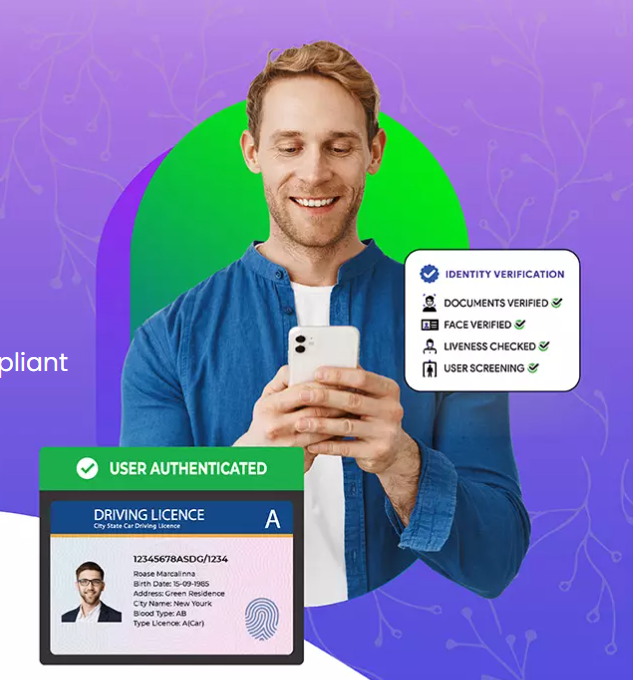
As digital services continue to expand, businesses need reliable ways to verify identities while protecting users from fraud. Certified liveness detection and NFC identity verification are two important technologies that help organizations strengthen digital identity security. When integrated into an identity verification workflow, they can support safer onboarding, improve verification accuracy, and create a smoother experience for legitimate users.
Certified liveness detection is a biometric security process designed to determine whether a face presented during verification belongs to a real, physically present person rather than a photograph, recorded video, mask, or other spoofing attempt. Depending on the solution, liveness detection may use facial movement analysis, texture assessment, depth information, or advanced AI-based algorithms.
Certification can indicate that a solution has been evaluated against particular standards or testing requirements. Businesses should review the relevant certification, testing methodology, and scope before selecting a provider.
This technology is particularly useful for remote customer onboarding, digital banking, financial services, employee verification, and other applications where confirming a person's physical presence is important.
Key benefits include:
Near Field Communication (NFC) is a short-range wireless technology that allows compatible devices to communicate with electronic chips embedded in identity documents. NFC identity verification uses this capability to read supported information from documents such as electronic passports and certain biometric identity cards.
Instead of relying exclusively on a photograph or information printed on a document, an NFC-enabled verification system can access data stored electronically on the document's chip. Depending on the document and verification solution, this may include identity details, a facial image, and cryptographic information used to assess document authenticity.
NFC identity verification can help businesses detect inconsistencies between a document's printed information and its electronic data. However, successful chip reading alone does not establish that the person presenting the document is its rightful owner. Additional checks are necessary to connect the document securely to the individual.
Combining certified liveness detection with NFC identity verification creates a more comprehensive identity verification process.
First, the user captures a live facial image or completes a liveness challenge through a compatible device. The system assesses whether the capture appears to originate from a real person. Next, the user scans their NFC-enabled identity document using a compatible smartphone. The verification platform reads the available chip data and performs relevant authenticity checks.
The system can then compare the facial image obtained from the document with the live facial capture. Depending on the implementation, additional security measures may include document validation, cryptographic checks, and risk-based fraud screening.
This layered approach helps address different threats: liveness detection focuses on presentation attacks, while NFC verification provides access to electronically stored document information.
Financial institutions can use these technologies during digital account opening and customer due diligence. Fintech platforms can strengthen remote onboarding, while telecom providers can support customer identity checks. Recruitment platforms and digital service providers may also use biometric and document verification to establish greater confidence in user identities.
Organizations should consider privacy requirements, accessibility, device compatibility, consent, and secure handling of biometric and identity data when deploying these solutions.
Certified liveness detection and NFC identity verification offer complementary capabilities for modern digital identity security. By assessing a user's physical presence and checking information stored in compatible electronic identity documents, businesses can build stronger verification workflows without unnecessarily complicating the customer journey.
For organizations seeking dependable digital onboarding, combining biometric liveness checks, NFC document validation, and appropriate security controls can help reduce identity fraud risks while supporting a more convenient and trustworthy digital experience.