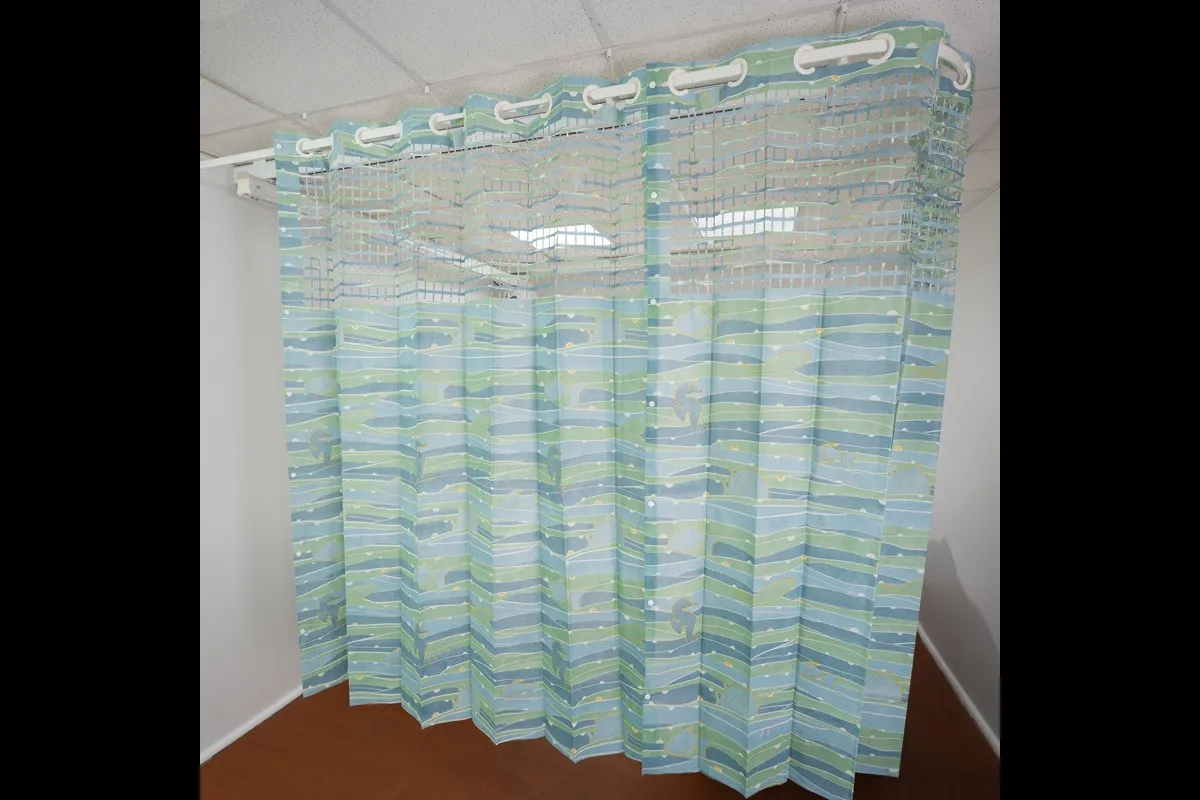
Healthcare facilities require reliable solutions that maintain patient privacy, promote cleanliness, and support efficient daily operations. From busy hospital wards to private examination rooms, curtains play an essential role in creating comfortable and organized medical environments.
Choosing Reusable Hospital Curtains can be a practical investment for healthcare organizations looking to balance durability, patient comfort, and long-term operational costs.
Unlike single-use alternatives, reusable medical curtains are designed for repeated use with appropriate cleaning and maintenance. Their versatility makes them suitable for hospitals, outpatient clinics, rehabilitation centers, nursing homes, and various other healthcare settings.
Patient privacy is a fundamental requirement in healthcare environments. Whether patients are receiving medical treatment, undergoing examinations, or recovering from procedures, maintaining a private and comfortable space is essential.
Reusable privacy curtains provide flexible separation between treatment areas without requiring permanent walls or structural modifications.
These curtains are particularly useful in facilities where room layouts must accommodate different patient needs.
Some important benefits include:
Enhanced Patient Privacy: Provide visual separation during consultations, examinations, and treatment.
Long-Term Durability: Quality textile curtains are designed to withstand repeated handling and appropriate laundering.
Cost Management: Repeated use may reduce the need for frequent purchases of replacement curtains.
Flexible Installation: Curtain systems can accommodate different medical room layouts.
Professional Appearance: Available fabric designs and colors help create a welcoming healthcare environment.
Reduced Disposable Waste: Reusable options can limit the volume of single-use curtain waste.
Selecting suitable hospital curtains requires attention to material quality, installation compatibility, maintenance requirements, and performance.
Reusable hospital curtains are commonly manufactured using durable textile fabrics designed for frequent handling.
Polyester and polyester-blend fabrics are often selected because they can offer strength, dimensional stability, and convenient maintenance.
The fabric should be suitable for the laundering procedures required by the healthcare facility.
Healthcare environments require regular cleaning and appropriate infection prevention practices.
Reusable curtains should have clear manufacturer-approved cleaning instructions so they can be laundered safely when necessary.
Proper maintenance helps preserve curtain appearance, functionality, and service life.
Every healthcare facility has unique architectural requirements.
Curtains may need to accommodate different ceiling heights, patient bed arrangements, and examination room dimensions.
Custom sizing allows facility managers to select suitable curtain widths and lengths for effective privacy coverage.
Traditional hospital privacy curtain systems often use hooks, carriers, or other hanging components.
Modern hookless curtain track systems can simplify installation and removal, helping maintenance staff change curtains more conveniently.
An efficient changeout process is particularly valuable in facilities with numerous patient rooms.
The appearance of patient rooms can influence the overall atmosphere of a healthcare facility.
Reusable textile curtains are available in different patterns and colors, allowing administrators to create a coordinated and professional interior.
Soft colors and thoughtful designs can contribute to a calmer, more welcoming environment.
Environmental responsibility is becoming increasingly important in healthcare purchasing decisions.
Hospitals generate waste from numerous products used throughout their daily operations.
Reusable curtains offer an alternative to frequent disposal by allowing products to remain in service through multiple cleaning cycles.
Durable textile curtains may reduce the volume of discarded curtain materials when compared with systems that require frequent single-use replacements.
The actual environmental benefit depends on product lifespan, manufacturing, laundering, transportation, and disposal practices.
Choosing long-lasting medical products can support responsible purchasing decisions.
Healthcare facilities can evaluate the expected lifespan of curtains alongside maintenance requirements to determine which option best fits their sustainability goals.
Reusable hospital curtains allow healthcare administrators to establish planned cleaning, inspection, and replacement schedules.
Such planning can help reduce unnecessary purchasing while maintaining appropriate privacy standards.
Both reusable and disposable hospital curtains have practical applications in healthcare environments.
| Feature | Reusable Hospital Curtains | Disposable Hospital Curtains |
|---|---|---|
| Material | Usually washable textile fabric | Typically single-use materials |
| Usage | Multiple uses with proper laundering | Replaced after designated use |
| Maintenance | Requires appropriate cleaning | Generally does not require laundering |
| Initial Cost | May involve a higher initial investment | Depends on product and purchasing volume |
| Waste Management | May reduce single-use waste | Requires appropriate disposal or recycling |
| Best Suited For | Facilities with laundering capacity | Areas requiring convenient, frequent replacement |
The ideal solution depends on infection prevention policies, cleaning resources, patient turnover, and overall operating costs.
Reusable privacy curtains are suitable for various healthcare settings.
Patient rooms often accommodate multiple beds or treatment areas.
Privacy curtains create individual spaces while allowing medical professionals convenient access to patients.
Emergency departments require flexible layouts and efficient patient care.
Hospital curtains help separate examination and treatment areas without permanent partitions.
Patients undergoing rehabilitation may require privacy during therapy sessions, examinations, and personal care.
Reusable curtains provide practical separation in shared treatment spaces.
Comfort and dignity are important considerations in residential healthcare environments.
Privacy curtains help residents maintain personal space while allowing caregivers to provide assistance.
Medical clinics can use reusable curtains to organize examination areas and improve patient privacy.
Their flexible installation makes them suitable for facilities with limited space.
Selecting the right curtain supplier is essential for maintaining product quality, compatibility, and convenient maintenance.
On the Right Track provides healthcare privacy curtain solutions designed to support patient comfort, efficient installation, and practical curtain management.
The company offers durable textile cubicle curtains alongside disposable alternatives, giving healthcare facilities different options based on their operating requirements.
Its patented hookless curtain track system is designed to make curtain changeouts easier without relying on traditional hooks and ladders.
For facilities choosing reusable textile curtains, convenient installation and removal can help simplify routine laundering and replacement procedures.
With various curtain patterns, configurations, and management solutions, healthcare organizations can explore products that suit their specific layouts and operational needs.
Proper cleaning and maintenance are essential for preserving reusable curtain quality.
Healthcare administrators should establish a maintenance program based on manufacturer guidance and their facility's infection prevention policies.
Important practices include:
Routine Inspection: Examine curtains regularly for damage, visible contamination, or excessive wear.
Appropriate Laundering: Follow recommended cleaning methods, temperatures, and detergent requirements.
Timely Replacement: Replace curtains when they no longer meet functional or hygiene requirements.
Proper Storage: Keep cleaned curtains in designated, protected storage areas.
Staff Training: Ensure maintenance teams understand safe curtain removal, handling, and reinstallation.
These procedures help maintain consistent curtain performance while supporting established healthcare hygiene standards.
Hospital environments can feel unfamiliar and stressful for patients.
Providing private treatment spaces can contribute to a greater sense of comfort and dignity.
Reusable curtains create a physical visual barrier between patients, making it easier to conduct examinations and provide personal care discreetly.
Thoughtfully selected colors and fabrics can also improve the appearance of medical rooms.
In shared healthcare spaces, functional privacy curtain systems allow staff to adapt treatment areas according to patient needs.
Although curtains primarily provide visual privacy, properly designed room layouts and patient communication practices are also necessary to support confidentiality.
Before investing in reusable healthcare curtains, facility managers should evaluate several important considerations.
Fabric Quality: Select durable materials suitable for the facility's cleaning procedures.
Curtain Dimensions: Confirm that curtain sizes provide appropriate coverage for patient areas.
Track Compatibility: Ensure the selected curtains work with existing or planned curtain track systems.
Cleaning Requirements: Evaluate laundering procedures, associated costs, and staff availability.
Design and Appearance: Choose colors and patterns that complement the facility's interior.
Installation Efficiency: Consider how easily curtains can be removed and reinstalled.
Long-Term Cost: Calculate the combined expenses of purchasing, laundering, maintaining, and replacing curtains.
Assessing these factors helps healthcare administrators make informed purchasing decisions.
Healthcare organizations must balance operating budgets with patient comfort and practical facility management.
High-quality reusable curtains can provide lasting value when properly selected and maintained.
Their durability may reduce replacement frequency, while compatible installation systems can simplify routine curtain changes.
However, long-term savings depend on laundering costs, curtain lifespan, patient turnover, and the facility's maintenance procedures.
By considering these factors during procurement, healthcare facilities can select privacy curtain solutions that meet their daily operational requirements.
Reusable hospital curtains offer a practical combination of patient privacy, durability, flexible installation, and long-term usability.
Their washable textile construction makes them a suitable option for healthcare facilities with established cleaning and maintenance programs.
When paired with appropriate curtain track systems and consistent maintenance procedures, reusable curtains can support efficient space management and a comfortable patient environment.
For hospitals, clinics, and long-term care facilities, selecting quality reusable privacy curtains is an important part of creating functional, welcoming, and professionally managed healthcare spaces.