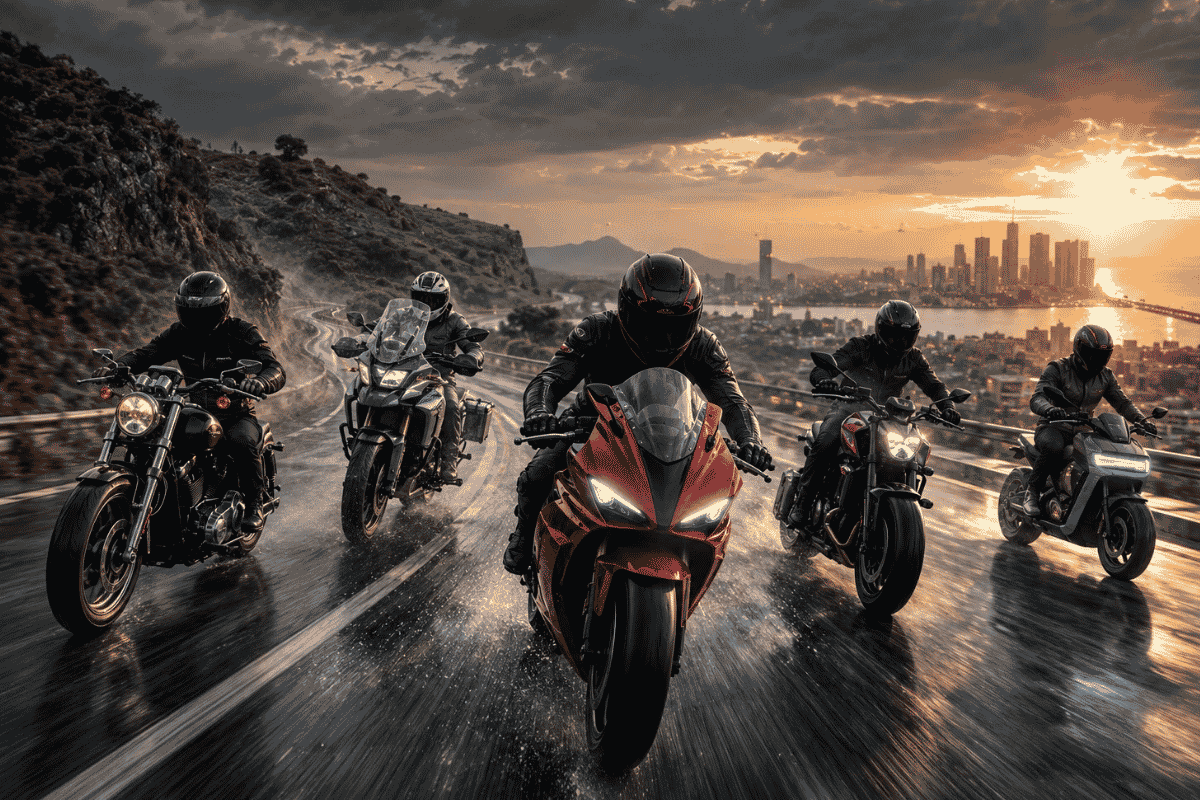
Motorcycles should not be compared only by price or engine capacity. Two bikes with similar engines may offer completely different ownership experiences because they belong to different categories.
The seating position, weight, suspension, fuel efficiency and intended purpose can affect whether a motorcycle feels suitable for your daily routine. Comparing these practical factors can help you make a more informed decision.
Commuter and adventure motorcycles generally offer an upright seating position. This can provide good visibility and reduce pressure on the wrists during everyday travel.
Sports bikes normally position the rider farther forward. This posture supports performance riding but may become uncomfortable in slow traffic.
Cruisers use low seats and relaxed handlebars. Touring motorcycles focus on maintaining comfort over extended distances.
No riding position is universally best. The correct choice depends on your body, experience and typical journey length.
A lightweight bike can be easier to manage in traffic, parking areas and narrow streets. This is one reason commuters and smaller street motorcycles are popular with beginners.
Cruisers, tourers and large adventure bikes may provide excellent stability but require more effort at low speeds. Their weight becomes especially important while reversing or stopping on uneven ground.
Do not judge manageability only while the bike is resting on its side stand. Sit on it and test its balance during a proper ride.
Commuter motorcycles generally provide the best fuel efficiency. Sports, touring and large adventure bikes may consume more petrol due to their engines and weight.
Consider additional expenses such as:
Insurance
Scheduled servicing
Replacement tyres
Spare parts
Riding equipment
Fuel or charging costs
Electric motorcycles may reduce routine energy expenses, but battery warranty and potential replacement costs should be examined carefully.
Comfort depends on more than the softness of the seat. Handlebar reach, footrest position, suspension and wind protection all affect how a motorcycle feels.
Touring bikes may offer windscreens and luggage capacity, while adventure motorcycles provide suspension designed for unpredictable surfaces. Commuters prioritise comfort at moderate speeds, and sports bikes concentrate more heavily on control and aerodynamics.
A test ride is the most reliable way to evaluate these differences.
Think about the roads you use regularly.
A commuter motorcycle performs well on normal city roads. A street bike can handle city travel and occasional highways. Touring motorcycles are suitable for long paved journeys, while adventure bikes can manage a broader mixture of surfaces.
Dirt bikes are specialised for trails and off-road riding. Buyers should confirm whether a particular off-road model is legally approved for normal public roads.
A motorcycle may look attractive on paper, but ownership can become inconvenient when the nearest authorised service centre is far away.
Before purchasing, research service intervals, parts availability and the experiences of long-term owners. A reliable local service network can be more valuable than an additional feature you rarely use.
Begin with your intended purpose and total ownership budget. Next, select the category that best matches those requirements.
This detailed guide to the types of bikes in India can help you compare the main categories before visiting dealerships.
Shortlist no more than three models at first. Take separate test rides and compare their comfort, weight, braking and low-speed control.
A motorcycle should fit your ordinary routine—not only perform well during a short and exciting showroom demonstration.